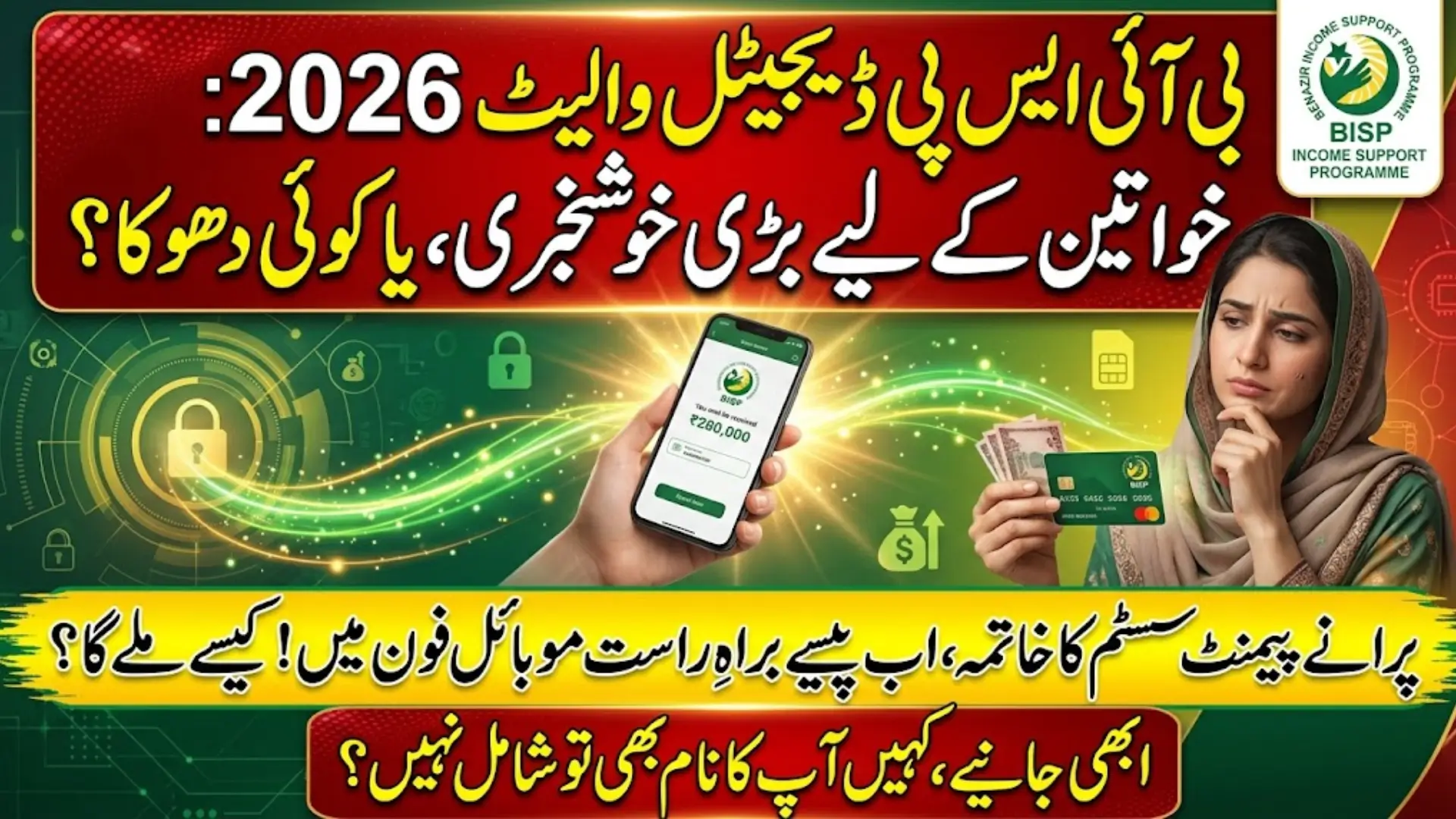
BISP Digital Wallet 2026
BISP Digital Wallet 2026: For millions of women across Pakistan, collecting financial assistance has long meant hours of waiting, long journeys to payment centers, and sometimes unfair deductions along the way. That is now changing. The Benazir Income Support Programme (BISP), the country’s largest social protection scheme, has begun a nationwide shift toward digital wallets putting payments directly into beneficiaries’ hands through their mobile phones.
What Exactly Is Changing
Starting July 2026, BISP payments are being routed exclusively through digital wallets instead of the old cash-collection model. To make this possible, the programme has issued free Benazir SIM cards to beneficiaries, which are used to activate their personal digital wallets. So far, more than 8 million SIMs have already been distributed to women across the country.
Send Your CNIC to 8171 to Register for BISP 2026
Once funds are transferred, beneficiaries receive an SMS alert on their phone, after which they can withdraw the money from any participating bank or banking channel at a time that suits them no fixed queue, no fixed location.
The People Behind the Rollout
BISP Chairperson Senator Rubina Khalid has personally overseen the transition, describing it as a matter of dignity as much as convenience. According to her, nearly 9 million women had their wallet accounts opened and first payments processed in a single phase one of the largest financial-inclusion drives the programme has carried out.
The push isn’t isolated to BISP alone. Bilal Azhar Kayani, Pakistan’s Minister of State for Finance, has pointed to it as part of a broader national move toward digital payments, noting that the country now has more than 137 million digital banking users, supported by the growth of the Raast instant payment system.
BISP 8171 CNIC Check 2026: How to Track Your Rs 14,500 Qist
A Built-In Safety Net: The Interoperability System
One detail that sets this rollout apart is BISP’s new interoperability system. Rather than tying a beneficiary to a single bank, it allows her to withdraw funds through multiple banking channels of her choice. For women who face biometric verification issues a common barrier in past cash-based disbursements alternate arrangements have been built in so their payments aren’t held up.
Why the Old System Needed to Go
The manual cash-payment model came with recurring problems that BISP has openly acknowledged:
- Long travel distances to reach payment centers
- Hours spent standing in line, often in extreme heat
- Unauthorized deductions taken by middlemen or corrupt agents
The digital wallet model addresses each of these directly money now moves straight from BISP to a wallet registered in the beneficiary’s own name, cutting out the human intermediary almost entirely.
The Bigger Picture: BISP’s Overall Reach
Digital wallets are only one part of a much larger programme. BISP currently supports:
- More than 10 million families under its flagship Kafaalat cash-transfer programme
- Roughly 12 million children receiving stipends through the Benazir Taleemi Wazaif education programme
- Over 2.2 million women and children enrolled in the Benazir Nashonuma nutrition programme, which has contributed to a 22 percent drop in child stunting
A Word of Caution: Watch Out for Fake SIM Offers
BISP has publicly warned beneficiaries to collect their Benazir SIM only from official BISP offices. SIMs obtained from unauthorized agents or unrelated individuals can create verification problems later and may delay or block payments entirely. If anyone approaches beneficiaries offering to “help” register a wallet outside official channels, BISP recommends verifying directly with the nearest BISP office rather than trusting unofficial sources.
FOR MORE INFO: 8171 BISP 2026 Retailer SIM Issuance System
FAQs
1. When did the digital wallet system officially start? Nationwide rollout began in July 2026, though SIM distribution and wallet registration had been underway in the months before that.
2. Where can beneficiaries get their free Benazir SIM? Only from designated BISP offices the SIM is issued free of cost and should not be obtained from any third party.
3. What happens if a beneficiary’s biometric verification fails? BISP has set up alternate verification arrangements so that affected women can still access their payments without long delays.
4. Can beneficiaries withdraw from more than one bank? Yes. The interoperability system lets beneficiaries choose from multiple banking channels rather than being locked into one bank.
5. Is the new system safer than the old cash-based one? That’s the core purpose of the shift moving money directly into a personal wallet is designed to eliminate unauthorized deductions and improve transparency.
Final Thoughts
The move to digital wallets is more than an administrative upgrade for millions of women, it represents genuine financial autonomy. It saves time, reduces the risk of exploitation, and gives beneficiaries direct control over money that is rightfully theirs. Anyone currently receiving BISP support, or with a family member who is, should visit their nearest BISP office as soon as possible to collect their Benazir SIM and avoid any disruption to upcoming installments.
YOU CAN ALSO READ: BISP ZWallet 2026: What This New Digital Payment System Actually Means for Beneficiaries