

Anyone who has lived in a Punjab village knows the same three complaints by heart. The street turns to mud when it rains. The drain overflows by Friday. And every promise of development somehow stops at the edge of the city. The Khushhal Dehat Act 2026 is meant to change exactly that.
That may finally be changing, at least on paper. On October 20, 2026, Chief Minister Maryam Nawaz approved a project to turn villages across Punjab into model villages, and the government decided to bring in a new law for it, the Khushhal Dehat Act 2026. A pilot project starts straight away in 120 villages. Here is what has actually been decided, and what is still missing.
What Is the Khushhal Dehat Act 2026
The Khushhal Dehat Act 2026 is the law the Punjab government plans to introduce for its model villages programme. The decision came out of a special meeting in Lahore chaired by the chief minister, where officials gave a detailed briefing on developing model settlements across the province. The idea is simple to say and hard to do: give villages the basic facilities that cities take for granted, and manage the work through committees inside the village itself.
The Pilot Starts With 120 Villages
The first phase covers 120 villages across Punjab, and the chief minister directed that village committees be formed at once, in consultation with local public representatives, along with a comprehensive implementation plan. One honest gap you should know about: the names of the 120 villages have not been published yet, and no budget figure or completion date was shared in the announcement. If your village is not on some list circulating on social media, do not panic and do not pay anyone. Wait for the official list.

Who Will Run the Village Committees
Under the Khushhal Dehat Act 2026, each village gets a committee of eight people. Four members are public representatives and four are government representatives, including the local headteacher, the union council secretary and a doctor from the Basic Health Unit or a Maryam Nawaz Health Clinic. The assistant commissioner of the area heads the committee, and the deputy commissioner supervises all the committees in the district. Members of the provincial assembly and party ticket holders will act as custodians of the development projects in their own villages. The same rural push sits behind farm support like the CM Punjab Green Tractor Scheme, and the jobs side of the story is covered in our guide to the Punjab industrial plan and its 162,000 jobs.
What Work Will Be Done in the Villages
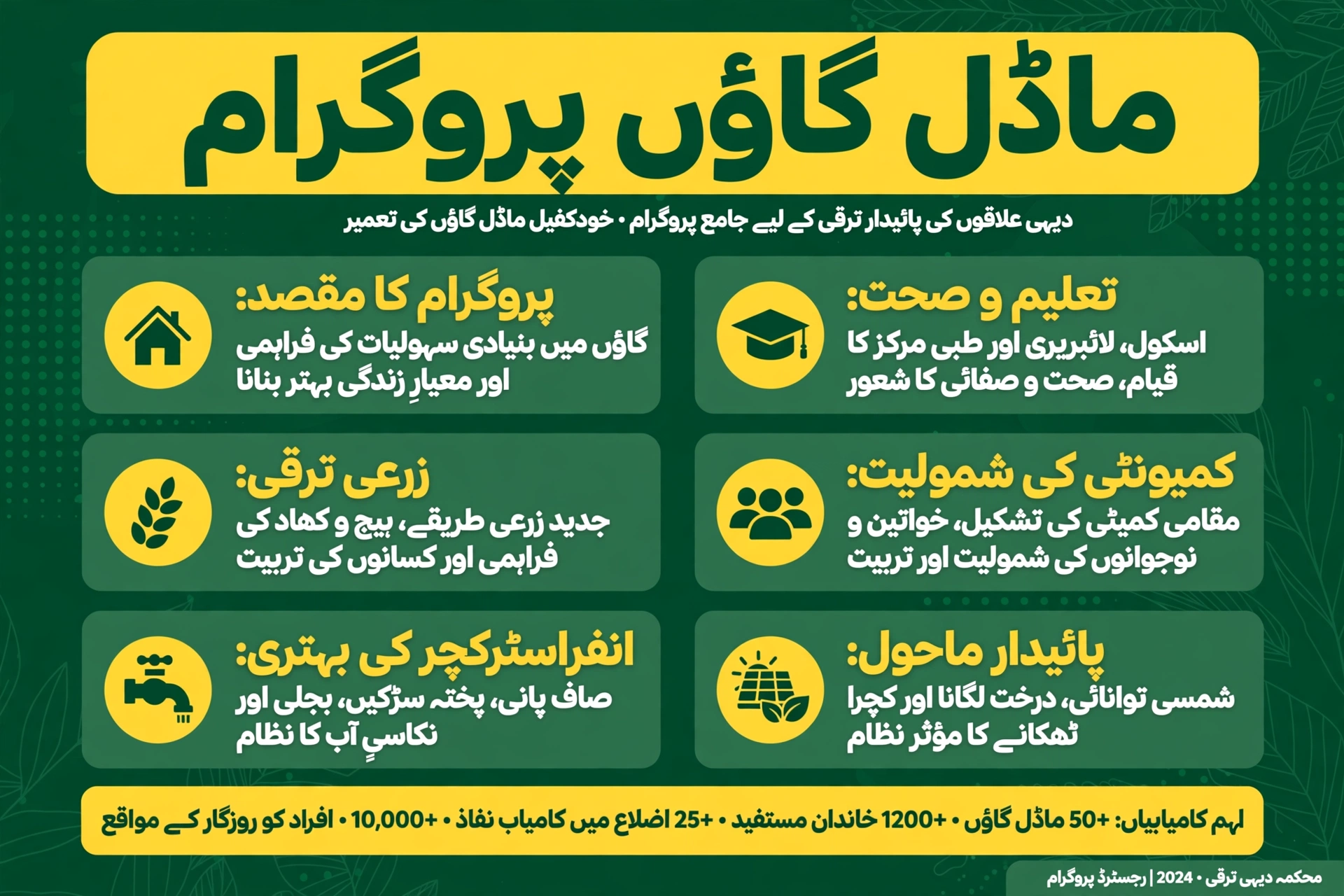
The briefing given to the chief minister listed the core works clearly. Every village in the programme will get sewerage systems, drainage facilities and paved streets. Residents will be consulted during the planning and the implementation, so the work reflects what the village actually needs first. The chief minister said development would no longer stay limited to big cities, and that quality and transparency would be ensured at every stage. She added that the day is not far when every village in Punjab becomes a model for others.
What Villagers Should Do Now
For now there is no form to fill and no office to visit. The Khushhal Dehat Act 2026 programme runs through the district administration and the committees, not through applications. Keep an eye on your union council and your assistant commissioner office for the committee announcement, and raise your street and drainage issues in the consultation when it happens in your village. That consultation is the one real doorway this programme gives you, so use it.
Official Source: Local Government and Community Development Department Punjab, official website
Khushhal Dehat Act 2026 FAQs
What is the Khushhal Dehat Act 2026?
It is the new law the Punjab government decided to introduce on October 20, 2026 for its model villages programme, starting with a pilot project in 120 villages.
How many villages are in the pilot project?
The pilot covers 120 villages across Punjab. The official list of selected villages has not been published yet, so treat any list you see on social media with care.
Who will head the village committees?
The assistant commissioner of the area heads each village committee, and the deputy commissioner supervises all committees. Each committee has eight members, four public representatives and four government representatives.
What work will be done in model villages?
The announced works are sewerage systems, drainage facilities and paved streets in every selected village, planned with consultation of the local residents.
Do I need to apply for my village to be included?
No. There is no application or registration for this programme. Villages are selected by the government and the work is managed through the district administration and the village committees.
[…] So where will the Punjab industrial plan jobs actually appear? Be patient, but be ready. Large programmes hire in waves, and the first wave is usually skilled people: technicians, machine operators, quality staff, and workers with trade certificates. If you are a fresh graduate, the province is also hiring directly, as our STI jobs guide shows. And whatever work you land, know your legal pay floor from our Punjab minimum wage guide, because a job offer below the notified wage is not a favour, it is a violation. The rural half of this development push is covered in our Khushhal Dehat Act 2026 guide. […]