

Ask any family in Punjab what inflation actually feels like and they will not quote you a percentage. They will tell you the price of a bag of atta. That is why the Sasta Atta Punjab decision mattered more than most cabinet announcements this month.
On October 10, 2026, Chief Minister Maryam Nawaz approved a Rs 10 billion subsidy to keep flour affordable across Punjab, after an emergency meeting held over video link where she expressed strong displeasure at rising flour prices and artificial rate hikes in the market. Twelve days on, this guide separates what the decision really gives you from what it does not.
What Is the Sasta Atta Punjab Subsidy
The Sasta Atta Punjab subsidy is a supply side relief package, and understanding that one point clears up most confusion. The government is not handing cash to families and there is no card, form or list attached to it. Instead, the province supplies government wheat to flour mills at a subsidised rate and has increased the mill quota, so mills keep producing flour without buying expensive wheat from the open market. The benefit reaches your kitchen through the price at the shop counter.
The Official Flour Rates You Should Know
Here is the number to carry in your head when you go to the bazaar. In a Punjab Food Department statement shared by Director General Food Punjab Amjad Hafeez, flour mills were directed to lift their government wheat quota at Rs 3,800 per maund, and the official rate for a 10 kg bag of flour was set at Rs 1,100. Under Sasta Atta Punjab, that Rs 1,100 rate is the one price control staff are told to enforce. If a shopkeeper asks well above that rate for the standard bag, he is not following the official price, and the chief minister has ordered strict action against artificial price increases. One honest note: the Rs 10 billion figure comes from the chief minister office announcement, and reporters searching for a separate written notification of the subsidy did not find one. The rate, however, is the Food Department rate, and that is what price control staff enforce.

How the Relief Reaches Ordinary Families
Slowly, and through the market. When mills receive affordable wheat in larger quantity, flour supply stays stable and bazaar prices stay closer to the official rate. There is no registration, no CNIC check and no application for this subsidy, so anyone asking you to pay for enrolment is lying.
Seasonal support works differently, as our 8070 Ramzan Package guide explains, and registered workers get monthly help through the Maryam Nawaz Ration Card. This subsidy is neither of those. Sasta Atta Punjab is price control backed by cheap wheat, nothing more and nothing less.
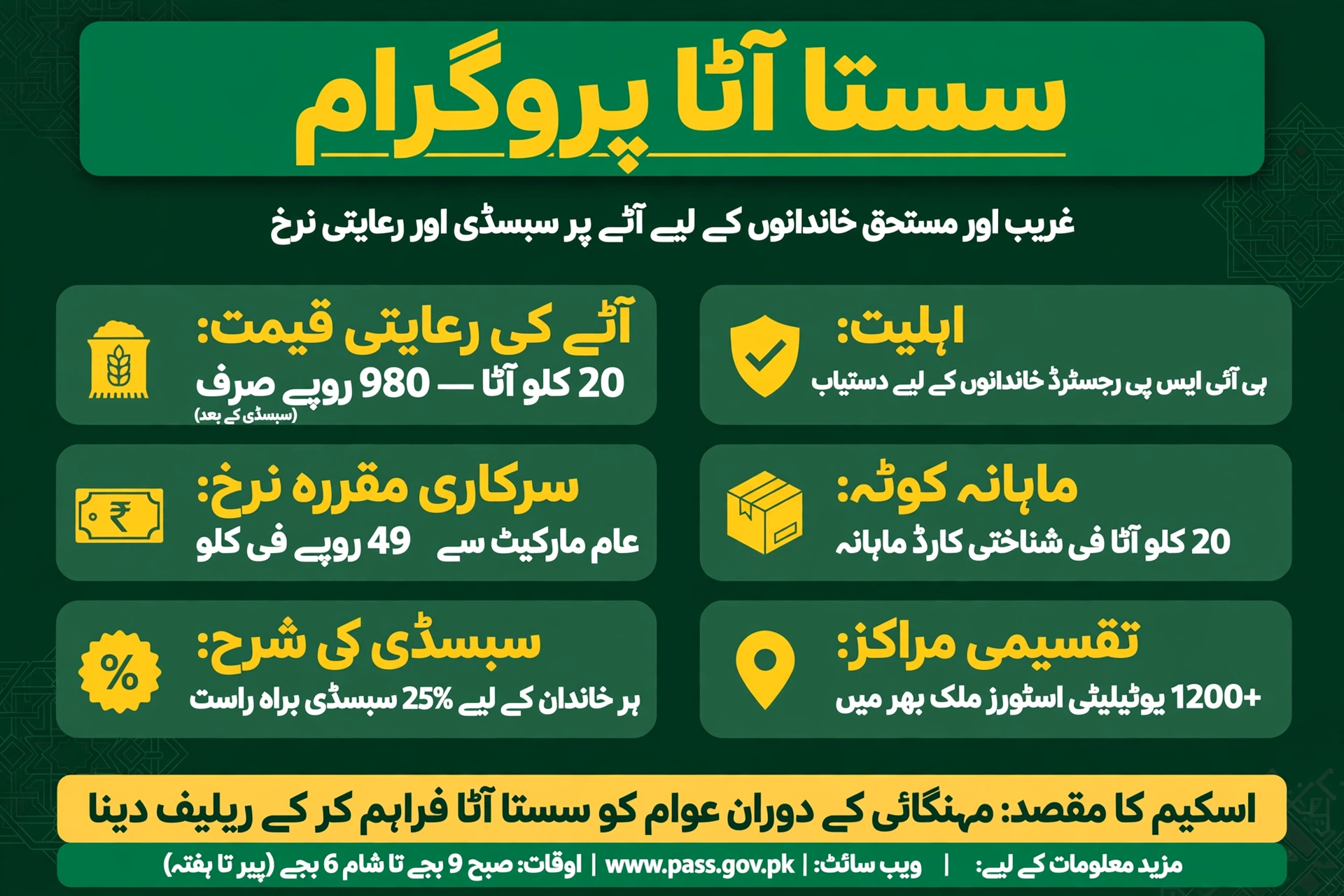
What to Do If a Shop Overcharges You
First, ask for the official rate plainly: Rs 1,100 for the 10 kg bag. Many arguments end right there. If the shopkeeper still refuses, note the shop name and area and complain to your district administration or the price control magistrate staff in your tehsil. Complaints work better in numbers, so raise it in your market committee or union council too. The government has publicly committed to monitoring flour prices under Sasta Atta Punjab, and overcharging complaints are the raw material that monitoring runs on.
Will Sasti Roti Continue
The chief minister said yes, in so many words. During the meeting she reaffirmed that affordable flour and low cost roti for the public would continue, and described the burden of inflation on the people of Punjab as something her government would use all possible resources to soften. Whether prices truly hold at Rs 1,100 in every bazaar will be decided by enforcement in the coming weeks, not by announcements. Watch your local rate. It is the only scoreboard that counts.
Official Source: Punjab Food Department, official website
Sasta Atta Punjab FAQs
What is the Sasta Atta Punjab subsidy?
It is a Rs 10 billion relief decision approved by Chief Minister Maryam Nawaz on October 10, 2026. The government supplies wheat to flour mills at a subsidised rate so flour stays affordable in the market.
What is the official price of a 10 kg flour bag?
The Punjab Food Department set the official rate of a 10 kg flour bag at Rs 1,100, with mills lifting government wheat at Rs 3,800 per maund.
Do I need to register or apply for sasta atta?
No. There is no registration, application or CNIC check. The subsidy works through flour mills and reaches you through controlled prices at shops.
What should I do if a shop charges more than the official rate?
Complain to your district administration or the price control magistrate in your tehsil, and report the shop name and area. The chief minister has ordered strict action against artificial price increases.
Is this the same as the Ramzan package or the ration card?
No. The Ramzan packages were seasonal relief and the ration card is a monthly subsidy for registered workers. The sasta atta subsidy is price relief for every buyer in the open market.